My grandmother taught me to cook when I was twelve or thirteen — not from recipes, but by making things, showing me how, and then letting me improvise. That’s the whole method, and it’s the only one I’ve ever used.
So I cook by making it up: no measuring, usually no clue what it’s called. Every so often I ask — is this anything? — and find my hands wandered into a tradition I never studied, off a coast my family came from. Other nights I just say what’s in the pot, and the one thing it was missing comes back to me.
These aren’t recipes to follow. They’re here to teach you to cook without one — the way she taught me — so it can keep being passed down. Read enough of them and maybe you won’t need a recipe again.
Cooked by Lisa Maraventano · talked through with Mr. Fable
“Garlic, parsley, breadcrumbs, and parm. With those you can make anything.”— my grandmother
(For me, it’s two garlics.)
The night I asked about the spinach instead of guessing. I had the farro, chickpeas, and olives going and wasn’t sure where to take it — so I talked it through, went Greek, and it turned into one of the best things I’ve ever made. The feta half-melts into the broth. The lemon puts it over the top. Do not overcook the farro. That is the whole game.
Soften an onion in good olive oil. Add farro, a can of chickpeas (drained), petite diced tomatoes, garlic, chopped parsley, and a handful of Kalamata olives. Simmer until the farro is tender but still has bite — watch it, and pull it before it goes soft.
Off or near the heat: wilt in a big handful of spinach, just until it collapses — keep it green. Squeeze in lemon: start with half, taste, add more. You want bright, not sour. Lay or crumble feta on top so it softens and starts melting into the broth. Tear fresh oregano over it. A good drizzle of olive oil. Salt carefully — the olives and feta are already salty, so taste first.
- A splash of undrinkable wine to deglaze the onions never hurts.
- Chard or kale in place of the spinach.
- It leans Greek because of the olives and feta. To send it Tuscan instead, drop those, add white beans and a little parmesan.
- No egg needed. It’s rich enough as it is.
- The farro is the whole thing. Chewy and distinct, not mushy. When in doubt, stop cooking it sooner.
The first one, made on an ordinary weeknight before I knew it belonged to a tradition. Zucchini and portabella to start, then the grain and the beans and the tomatoes, a cup of not-drinkable wine thrown in to deglaze. Nobody standardized this because it’s what the pot produced from what the garden had. That’s the whole idea.
Zucchini and portabella mushroom in olive oil until they take some color. Add chickpeas, a can of Cento crushed tomatoes, garlic, plenty of fresh chopped parsley, and dried herbs — oregano, basil, whatever’s in the cabinet. Throw in the farro. Pour in about a cup of undrinkable wine to deglaze and give it depth. Simmer until the farro is tender but still has bite.
Salt and pepper. Crushed red pepper. More fresh parsley on top. Parmesan — which will scandalize a couple of Italian provinces and delight the rest, and is exactly the kind of terroir-not-law choice this kitchen is built on.
- This lives in the minestra di farro family — Tuscan farmhouse stew, cucina povera, the poor kitchen. Farro is older than pasta; the legions marched on it.
- The undrinkable wine is not a mistake. Nothing wasted, everything transformed.
- Better on night two, once the farro has had a full day to drink the tomato and the wine.
- No pasta, no pecorino, parmesan where it pleases, farro as the load-bearing grain. A cuisine of one, fully legal.
A cold Sicilian salad I threw together without a recipe — and then learned, in conversation, exactly how Sicilian it was. The anchovy-garlic-oil dressing is the island’s signature, the tinned fish and the lemon straight off the coast my family comes from. Augusta, on the Siracusa side, where I once stayed in a cave with a 180-degree view of the sea. I didn’t set out to cook Sicilian. The instinct did it for me. That’s the whole idea of this kitchen.
Shredded red and green cabbage. A can of chickpeas, drained. One package of tuna, flaked in. Two hard-boiled eggs, quartered or chopped.
Garlic, anchovy (mashed into the oil until it dissolves), good olive oil, and acid — lemon, red wine vinegar, or both if the mood takes you. That anchovy-garlic-oil base is the island’s fingerprint; it’s what makes this taste like the coast and not just a slaw.
- Both lemon and vinegar is fine — brightness on brightness.
- The anchovy isn’t optional; it’s the whole reason it tastes Sicilian rather than generic. Mash it in so it melts into the oil.
- Oil-packed tuna, drained, gives more richness than water-packed.
- Capers or olives would be right at home here if you want to push it further.
- Cucina povera at the coast: tinned fish, an egg, a cabbage, and the pantry’s oil and acid. The sea and the field in one bowl.
The best thing is if you have a sister with a good sense of humor and a couple of ex-husbands between you. Take a flank steak and a mallet. Get your sister to hammer it flat while reciting every woman’s litany of complaints: sloth, greed, lust, sloth again. Broke in a kitchen with too many mouths to feed. Trust me, this is a good practice.
Then layer in salami, boiled egg, and the four main ingredients alla Georgia — parm, garlic, parsley, breadcrumb mixture. Roll it up and tie with twine in netted fashion. Suddenly it looks very much like a cazzo — which you and your sister then fry in olive oil until brown. Add it to the red sauce and let simmer for hours. Slice up that bad boy and serve to your hungry children.
The diet-friendly one — a whole dinner on a single sheet of parchment.
A bag of broccoli on parchment paper with olive oil (spray is fine), about 400° for 20 minutes. Add a can of diced tomatoes and a bag of shrimp — it can still be frozen. Then the usual suspects: onion and garlic, basil, oregano, parsley, salt and pepper. Roast another few minutes, maybe 10.
- Very low-cal and diet-friendly.
- The shrimp goes in straight from frozen — no thawing.
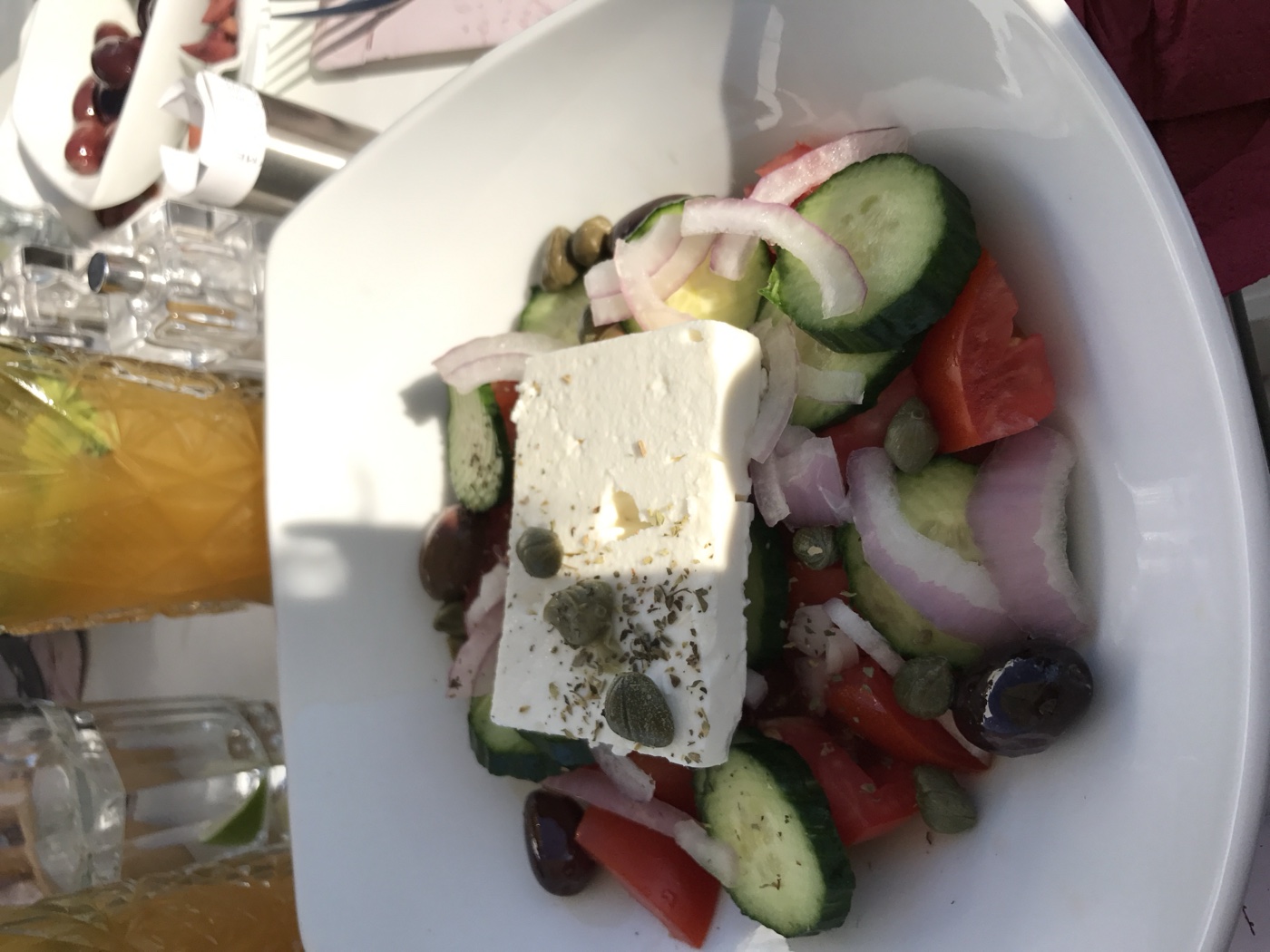
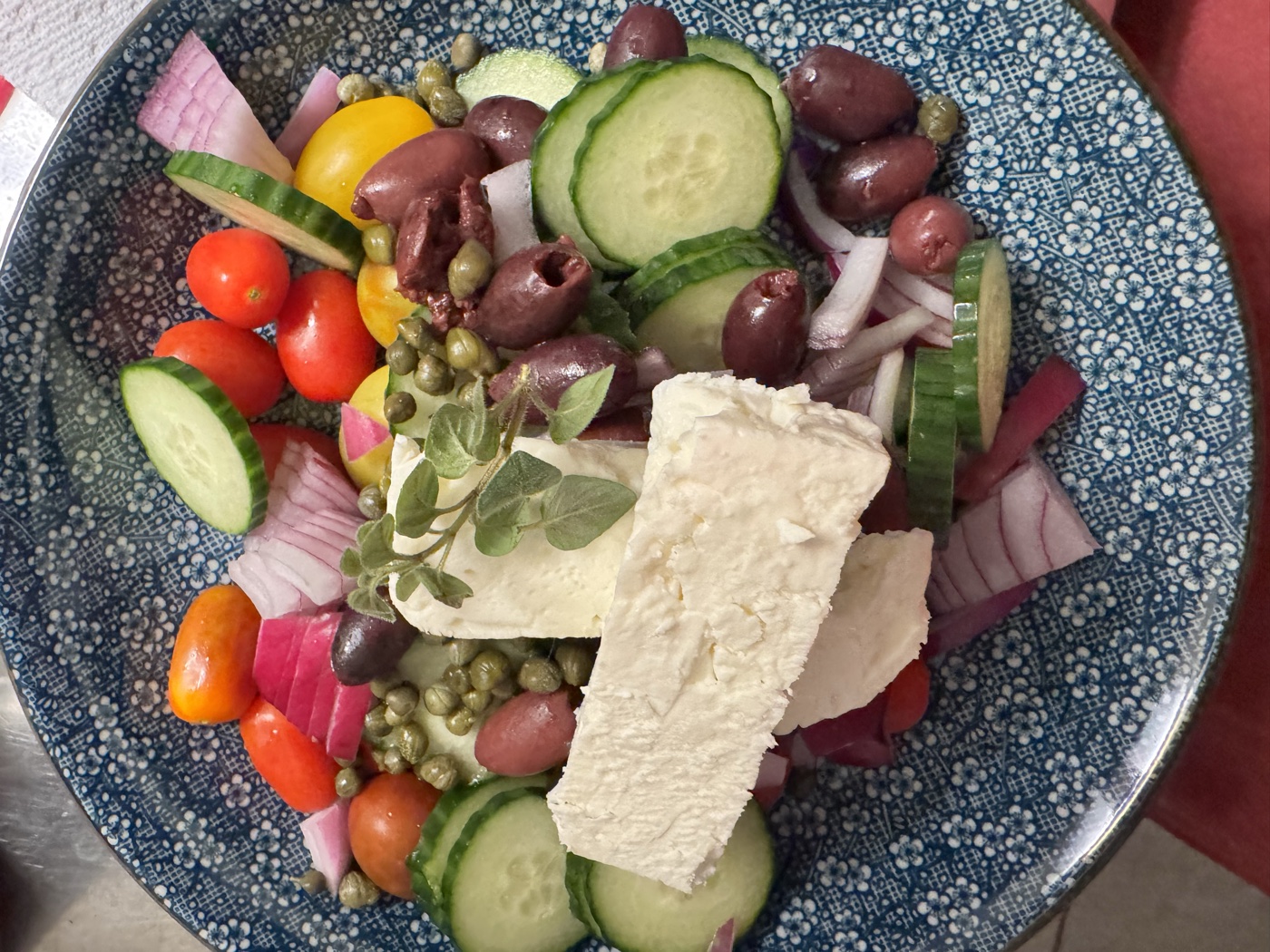
The way they serve it in Greece, and the way I make it at home. Feta in a slab, not crumbled, with a sprig of oregano. And no lettuce. Never lettuce.
Cucumber, tomatoes, kalamatas, large capers, red onion. Lemon and olive oil. A large slice of feta on top, a sprig of oregano.
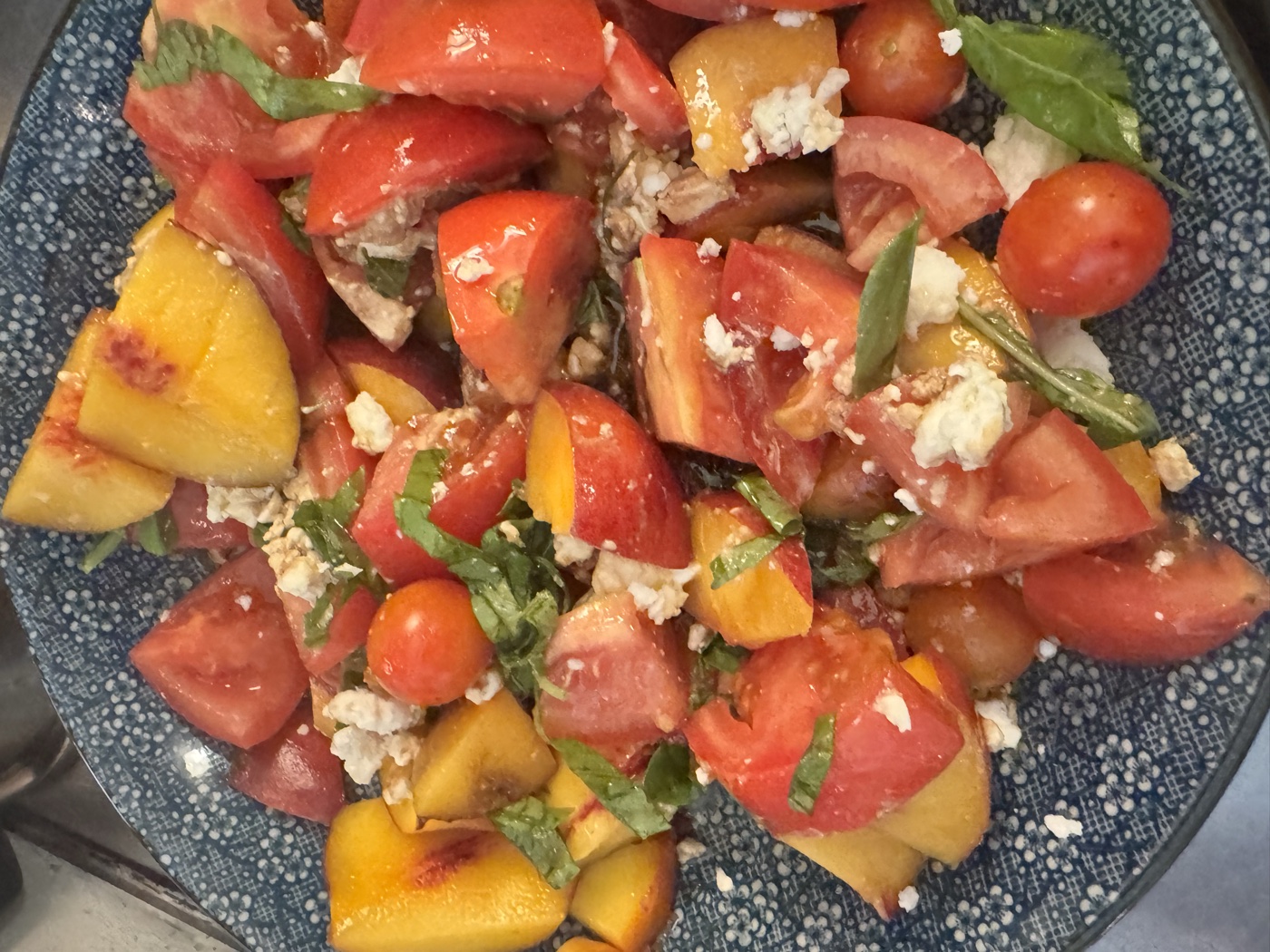
The best yellow peaches and the ripest tomatoes you can find. That’s the whole secret.
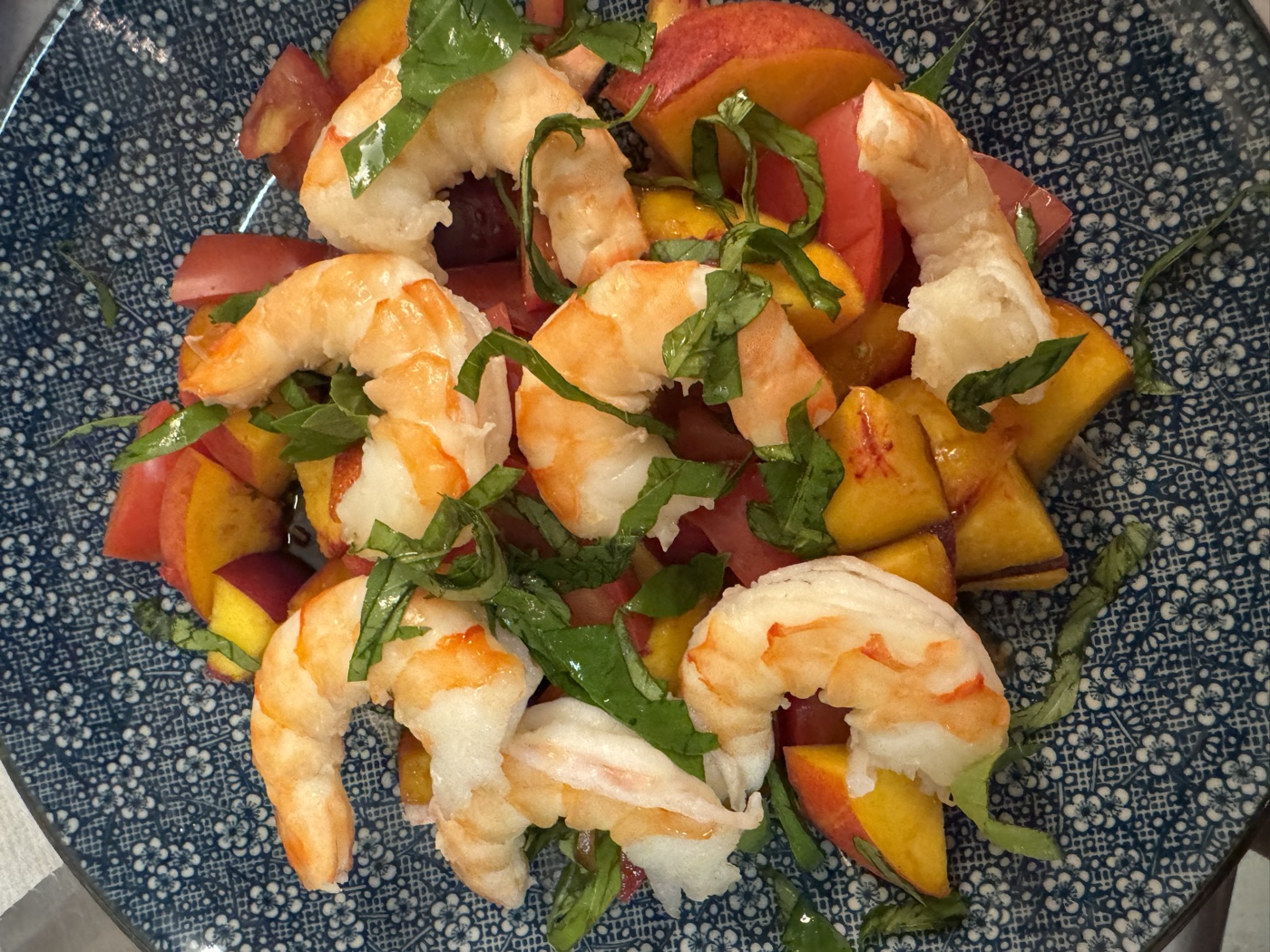
Rough-chop the peaches and tomatoes. Add basil, chiffonade — stack the leaves, roll them up, slice thin. Feta. Balsamic and olive oil. You win.
Add cold poached shrimp and it’s dinner, not a side — I leave the feta out when I do.
I’ve eaten this in Rome many times. It’s barely a recipe — but trust me. Dinner in about ten minutes.
Start the filet in olive oil, quite hot — not so hot the oil isn’t happy, but hot enough to really brown the meat. Season as you cook, or before; salt is the key here, a lot of it, then pepper, garlic, onion. Finish it to your taste — I like medium / medium-well, so I often slice it as I go.
Arugula and parm, thrown together while the kitchen fills with the smell of the steak. The key is way more parm than you think possible — like a third of the salad. A quarter, if you’re timid. Balsamic and olive oil.
This is not bolognese sauce — which I think is gross. This is comfort food. Mom’s spaghetti.
One pound of ground beef — I prefer lean; if you use fatty, drain it. Now brown the hell out of it. Not soggy — crisp, broken into little nibbles with the spatula. Season it: salt, pepper, onion, garlic. (Dice an onion — small, or half a large to a pound of meat — and brown it with the beef, or just use onion powder. Same with the garlic. I’d use maybe four big cloves, but I love garlic.)
Add your tomato sauce — I use Contadina, 29 oz to one pound of beef. Cento crushed or San Marzano are good too, but plain tomato sauce works fine. A tablespoon of paste or a splash of wine never hurts. Then the dried herbs: basil, oregano, parsley, more garlic and onion, black pepper. A bay leaf if you have one. Italian seasoning mix works in a pinch, but it’s better if you do the individual dried herbs.
Pasta or zoodles — do not overcook. That ruins the whole thing.
More as they come. The book is never finished — it’s just what I made, written down before it could get away.